Message and services
Visitors should quickly understand the work, service area, best-fit project, and reason to choose the business.
Clear services, real project proof, a credible message, and a direct path from interest to inquiry.
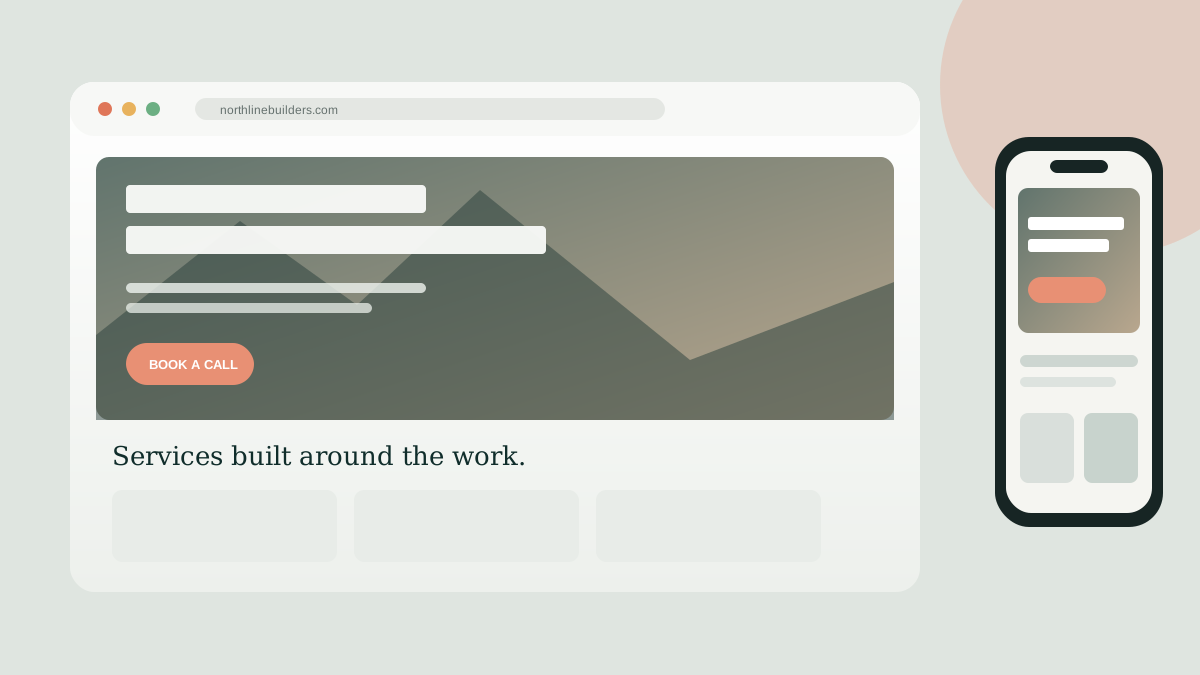
Start with the page written for the work you do. Each specialty guide is built as a complete, useful resource—not a thin copy with the trade name changed.
Visitors should quickly understand the work, service area, best-fit project, and reason to choose the business.
Real work, reviews, process details, credentials, and customer stories make skill and accountability visible.
Responsive pages, technical SEO, clear calls to action, and routed form notifications connect attention to a next step.

A useful website reflects how the business estimates, plans, communicates, completes, and stands behind the work. The details that matter to a remodeler are not identical to the details that matter to an electrician, concrete contractor, or home builder.
That is why each specialty page is written around real customer questions and accurate trade context. The design remains clear and consistent while the message, proof, terminology, and project path become specific to the work.
Explore contractor websitesDocument the services, best-fit work, service area, terminology, process, and proof.
Organize pages, project stories, search topics, and calls to action around customer decisions.
Create the responsive experience, prepare the content, and test every important path.
Connect the domain, route leads, complete the technical setup, and continue oversight.
A strong website makes the difference between proven craftsmanship and an interchangeable provider visible.
The specialty page goes deeper into the services, proof, process, questions, and language customers use when choosing that kind of business.